Even houses age, and with age come the first signs of wear. After the first 10 to 15 years, small repairs usually become necessary: repainting walls, replacing carpets, or making minor touch-ups. The structure itself lasts much longer, but after 40 to 60 years, a major renovation is typically due. Based on the service-life table for house components, you can estimate how long the different parts of your home will last and when they should be renewed.
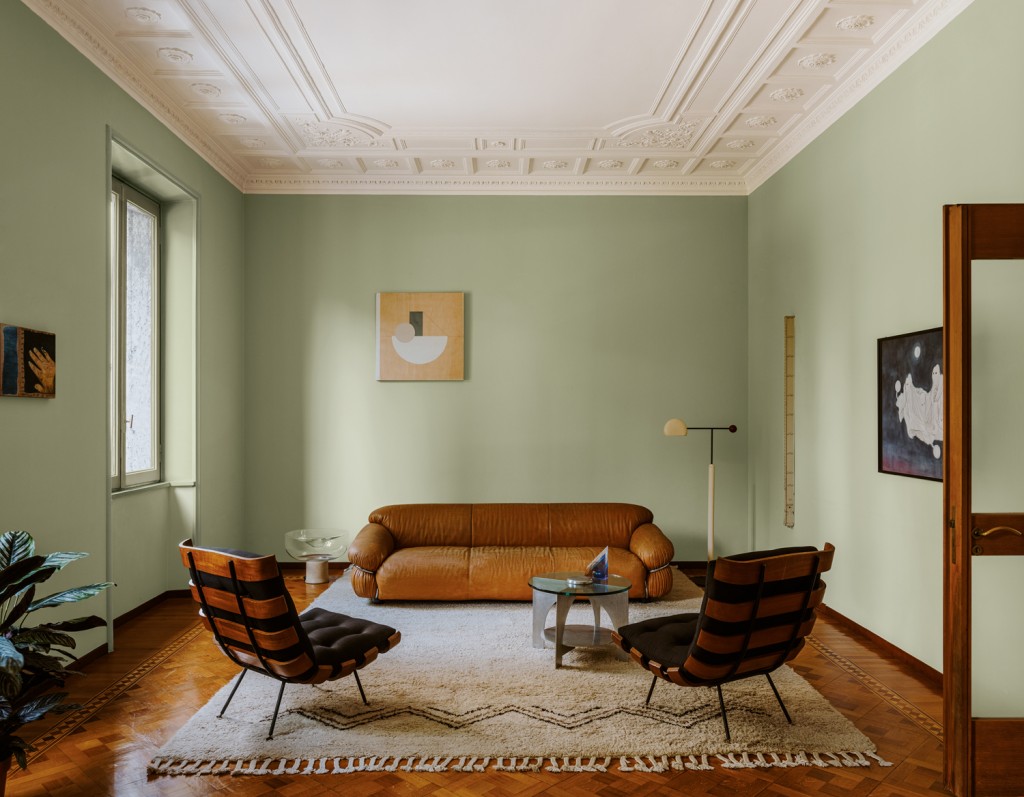
After 10 or 15 years, repainting the walls is usually necessary.
Renovation measures should never be considered in isolation. If you replace the heating system, for example, it often makes energy sense to renovate the building’s insulation at the same time. That is also a natural moment to think about extending the roof, creating a loft, reworking the layout, removing internal walls, or opening up larger rooms. At that point, the temptation is often to add a new kitchen and bathroom as well. But going that far can quickly strain the budget. For that reason, many homeowners end up choosing between a better quality of life and higher energy efficiency when the time for renovation arrives. In practice, the condition of the building’s components usually determines the order in which repairs are carried out.
Building permits for major renovations can take months to process, so applications should be submitted as early as possible if a renovation is planned.
Plan your renovation in advance
Renovating a house is undeniably expensive. The ideal approach is to plan ahead, well before work becomes unavoidable, and set aside funds in time. How much it costs depends, on the one hand, on the facilities you choose and, on the other, on the standard you want to achieve. For example, triple-glazed windows with aluminium or wood-metal frames cost roughly twice as much as the same windows with synthetic frames.
With a renovation calculator, you can assess individual renovation needs in just a few clicks, plan the timing of the work, estimate the cost, and prepare the necessary budget. A renovation plan also shows which components should be repaired or replaced at the same time so that the work can be organised efficiently and cost-effectively. With the right strategy, renovation expenses can be spread over years or even decades, helping control spending while maintaining or increasing the value of the home.
If you own an apartment, an online tool can also calculate the optimal share of contributions for the condominium association and help review the current renovation fund.
Make a wish list: what do you want to renovate?
There are three main reasons to renovate a house: to improve living comfort, to increase the home’s energy efficiency, or simply because a component has reached the end of its useful life and must be replaced. If something needs to be renewed, action should be taken immediately. If, however, the goal is to improve comfort or achieve greater energy efficiency, it is best to approach the renovation step by step. A good starting point is to make a wish list and write down everything you would like to change without worrying yet about technical feasibility or cost. Think broadly and do not let the current condition of the house limit your ideas. Houses can change quickly, for example when children move out and the needs of the household shift.
Building analysis: what should be renovated?
Once the wish list is complete, the next step is a detailed building analysis. An expert is usually needed to explain what must be done from a technical point of view and what makes sense from an energy perspective. On that basis, you can reconcile your wishes with the necessary or sensible measures and with your financial possibilities. For instance, if you want to renovate and enlarge the bathroom to create a two-person sauna, it may be worthwhile to combine that work with a new heating system and thermal insulation in order to optimise both renovation and maintenance costs. In that scenario, the bathroom and sauna improve comfort, the heating is a necessary upgrade, and the insulation is a sensible intervention.
Each year, it is useful to set aside 1 to 1.5% of the building’s value for renovation, ideally starting from the first day of ownership.
Restructuring plan: renovating in phases
If you are renovating an older house, a full renovation is usually cheaper than a gradual one, because certain tasks only need to be done once, such as erecting scaffolding. Renovation work is also faster and places less pressure on you, your family, and your neighbours. Even so, most apartment owners prefer to renovate in stages. First, because it allows them to spread the cost over time. Second, because they can deduct the investment over several tax periods, which can reduce the tax burden.
Industry professionals generally recommend the following order to avoid problems such as damp, mould, or thermal bridges:
- Phase 1: Install new windows and sun shading, and address the façade insulation.
- Phase 2: Renovate and insulate the roof, including work on the attic and basement ceiling.
- Phase 3: Install the heating system, preferably one that is energy- and resource-efficient.
- Phase 4: Finally, move on to the kitchen, bathroom, and pipes.
Replacing the windows and insulating the façade in the first phase, followed by roof insulation in the second, reduces heat loss and overall energy consumption. The new heating system in the third phase can then be designed for lower energy use. Renovating the kitchen and bathrooms helps maintain or improve living comfort, while new pipes provide long-term value and durability in the fourth phase.
Phase 1: Replace windows and sun shading, and insulate the façade
- New windows significantly reduce energy consumption, improve sound insulation, and offer better protection against intruders. Modern windows also tend to have larger glass surfaces and slimmer frames than older models, allowing more daylight into the home.
- New awnings are more resistant to constant exposure and tearing, and they are structurally more robust. They can be opened and closed manually or with a motor. Motorised blinds can be controlled remotely and may be integrated into a smart home system or regulated with a wind or sun sensor.
- Façade insulation makes sense when windows are replaced, because workers can insulate all the reveals at the same time. External cladding costs between CHF 200 and CHF 300 per square metre, including materials and labour. A suspended ventilated façade costs about a quarter more than that.
Order the windows at least three months before construction begins to avoid unnecessary delays. New windows can significantly reduce heating energy consumption.
Phase 2: Roof, attic floor, and basement ceiling
- Roof insulation lowers heating costs and helps maintain even indoor temperatures. Prices range from a few thousand francs for a simple flat roof to several tens of thousands for a complete roof renovation. If you are renovating the roof, you should also consider installing solar thermal or photovoltaic systems, especially if you plan to replace the old heating system as proposed in phase 3.
- Insulating the basement ceiling or attic floor is usually less expensive than insulating an entire façade or roof, because the same level of material strength is not required. As a guide, expect between CHF 150 and CHF 200 per square metre for interior insulation, or up to CHF 300 per square metre for exterior work including roof renovation.
Phase 3: Heating
The heating system should only be renewed after the windows and façade have been upgraded. If it is replaced too early, it will be too large for the home’s actual energy needs, will operate less efficiently, and will wear out sooner because it is oversized and will switch on and off more often than necessary. The cheapest short-term option is to replace the old system with a new oil heating system on a one-to-one basis. In the medium and long term, however, other heating systems are usually less expensive. The investment costs for a heat pump, for example, are higher, but thanks to lower energy costs it can pay for itself relatively quickly, especially if it is combined with solar collectors on the roof.
The canton, city, municipality, and regional energy agency may support energy-efficiency renovations such as insulation, solar installations, and new heating systems when an older house is being renovated. A general overview of similar support programmes in Switzerland may be available, and applications for contributions can often be submitted online if needed.
Phase 4: Kitchen, bathroom, and pipes
- Kitchen and bathroom costs are difficult to estimate because so much depends on personal wishes and needs. A simple kitchen, including appliances, or a simple bathroom, including tiles, is available from CHF 15,000 to CHF 18,000. More extensive fittings will naturally make these rooms more expensive.
- Whether you choose standard or luxury finishes in the kitchen and bathroom, an older house should have its water and electrical pipes checked during renovation and repaired if necessary. Pipes, for example, last between 40 and 60 years and should be serviced every five years.
The cost of a new kitchen depends primarily on your wishes and requirements.
latest posts published
Essential Elements That Cannot Be Missing from Scandinavian Decor

17 Original White Wood Kitchen Design Ideas

What Is Minimalism as a Lifestyle, and What Are the Benefits of This Way of Living?
Colors for Modern Kitchens: Ideas and Trends

From hanging wreaths to stockings full of treats: discover 10 ideas for decorating your Christmas fireplace mantel

5 DIY Christmas Decoration Ideas
5 Ways to Create Functional Zones by Separating the Kitchen from the Living Room
30 Black Kitchen Decorating Ideas
5 Roulette Strategies Allowed in Any Casino