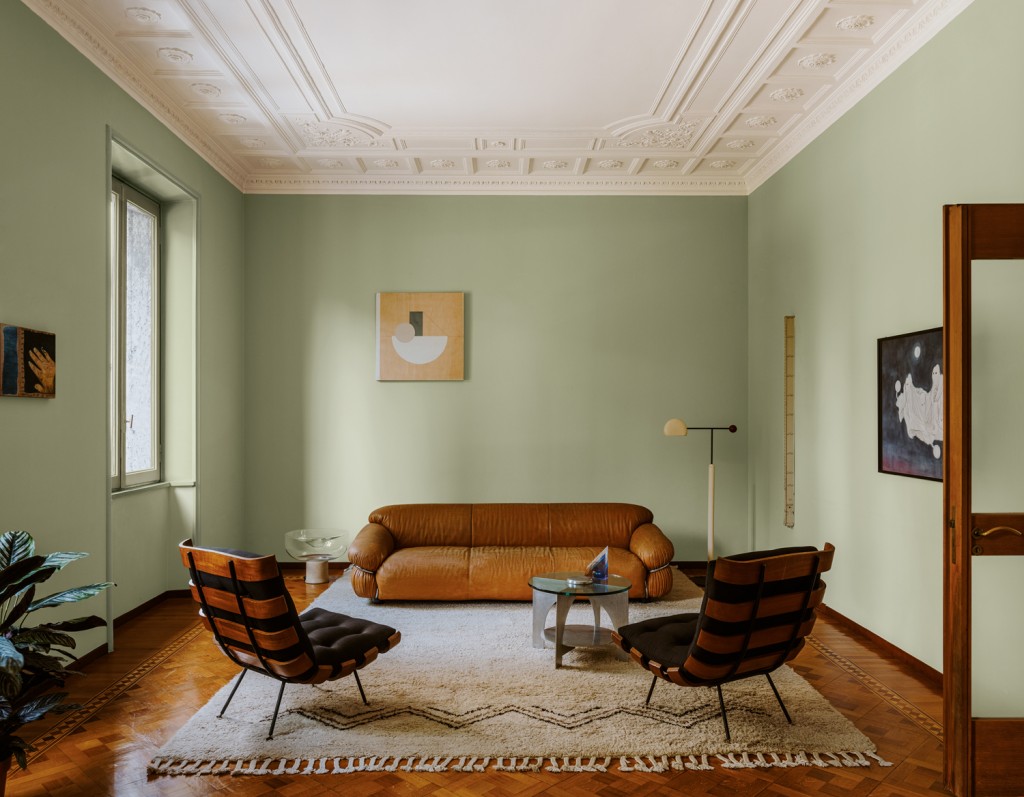
The Scandinavian style comes from the climate of the Nordic countries, where it was born, and from the need to create designer interiors that feel bright, refined, and warm. Geometric shapes, neutral shades, and pastel colours are among the essential elements of Scandinavian décor.
● Scandinavian style developed in response to the climate of the Nordic countries, where long winters and limited daylight made it necessary to design interiors that feel lighter and more inviting.
● Scandinavian décor is warm, comfortable, calming, refined, minimalist, and focused on harmony and well-being.
● Geometric shapes are a key feature of Scandinavian décor, along with pastel colours and natural materials.
● Neutral shades such as white, pastel tones, and graphic patterns dominate, reflecting the clean and elegant spirit of Scandinavian style.
The origins of Scandinavian style
In the Scandinavian countries, the climate is harsh: winters are freezing, days are extremely short, and night falls very early. As a result, people have long paid special attention to the way they furnish and decorate their homes. The goal is to compensate for the lack of natural light with interiors that feel warm and welcoming. In Denmark, this atmosphere is described by the word “hyggelig,” which can be translated as cosy or comfortable.
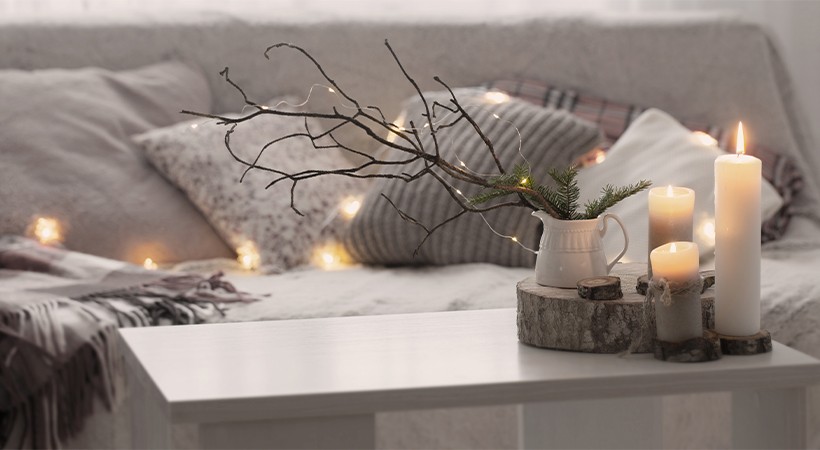
More than just a decorating trend, hygge is a way of life based on harmony and well-being. Denmark continues to rank among the happiest countries in the world, and Scandinavian interiors reflect that mindset. They are designed to feel cocooning and restful, while still remaining refined and simple. The result is a style that balances comfort with restraint rather than overwhelming a room with decoration.
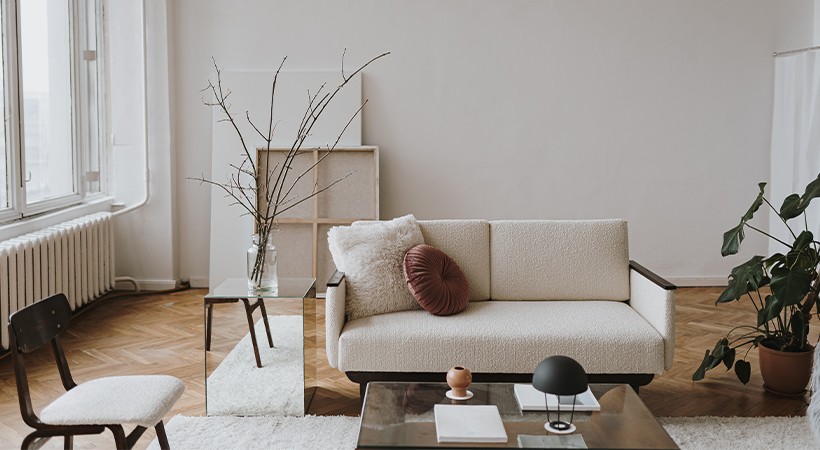
Sweden has its own guiding idea as well: Lagom, a Swedish motto meaning “not too much, not too little.” It describes a style that is balanced, elegant, and measured, where colours, materials, sources of light, and decorative objects all coexist in perfect harmony.
Geometry and Scandinavian style
Scandinavian interiors are defined by geometric forms, natural materials, and a strong presence of white and pastel colours.

Nature is at the heart of this style, and the lines are clean and uncluttered. Scandinavian design seeks beauty and function in equal measure, which is why geometry plays such an important role. Triangles, circles, squares, and diamonds appear on furniture, in accessories, and even on walls. Graphic pieces with geometric motifs, such as cushions and rugs, help structure the space while adding visual interest. The same logic applies to lighting, which is abundant in Scandinavian homes because it helps make up for the lack of natural daylight.

You can also bring geometric shapes onto the walls with pastel paint. The Relook All Matte range offers a pastel colour chart, and its aerosol format makes it easy to create triangle-shaped patterns, for example. For the best result, keep the designs minimal so that the refined spirit of Scandinavian style remains intact, and use stencils if you want greater precision. For wall art, posters or framed prints also work well, whether hung alone or arranged in triptychs.

Colours in Scandinavian style
Neutral shades dominate this decorating trend. Bright white is especially common on walls and floors, while grey and light wood tones also play an important role. The Grands Blancs range, the Velvet finish, and the Relook All finishing paint in Vanilla, Kraft, and pebble tones can give your walls a soft, luminous Scandinavian look. But the Scandinavian palette is not limited to white and grey. Pastel shades such as powder pink, light blue, soft yellow, and sea green also have their place. Finally, because this style is deeply inspired by the natural world of the Nordic countries, Scandinavian blue and forest green are also found in interiors that embrace this décor.

To give your rooms more lightness and movement, you can play with colour, geometric shapes, and material effects. Our renovation coating “Reliss waxed concrete effect,” with its mineral-inspired tone, adds contrast and character to walls.
Materials in Scandinavian style
Scandinavian style is inseparable from wood. It is the material that helps warm up an interior and make it feel more welcoming. To adopt this decorative trend at home, light, bright woods are preferred. The woods commonly used in Scandinavian design include pine, oak, beech, and ash. On the floor, a raw or lime-washed Scandinavian-style surface is often used; on the walls, wood cladding helps structure the space and give it rhythm; and wood also appears in furniture and decorative objects.

These surfaces can be enhanced in two ways: first, with “Wood modification with wood effect” for doors, beams, or panelling, to restore the brightness of the wood while preserving its natural grain; or with “Furniture modification with wood effect” to transform old furniture and recreate wood grain and colour directly on smooth surfaces such as melamine or metal.
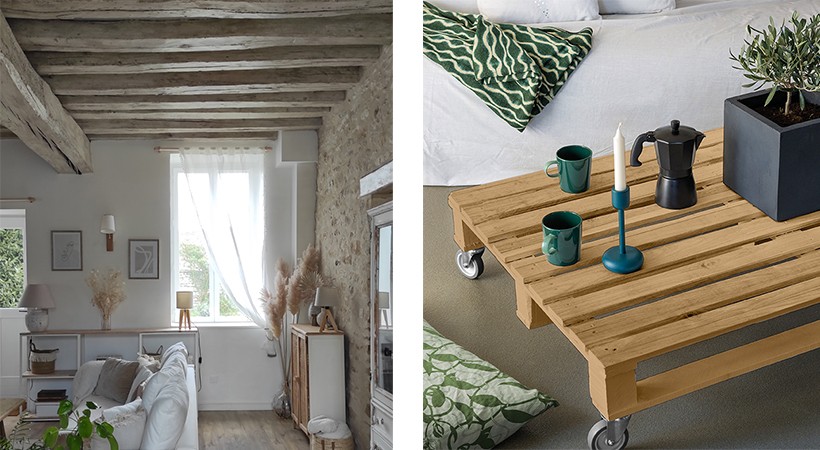
You can combine wood with noble materials such as leather, copper or other metals, glass, marble, or another natural stone.
For rugs and other textiles, wool, sheepskin, and similar soft materials are ideal, along with geometric patterns that keep the overall look coherent.
Scandinavian furniture
In a Scandinavian interior, furniture and decorative objects need to be chosen carefully. Common elements include:
● candle holders, vases and single-stem vases, decorative boxes, mirrors, picture frames, and vintage-style plant pots;
● furniture with tapered compass legs that narrow toward the bottom.
Certain pieces are strongly associated with Scandinavian design: sideboards, armchairs with curved backs, and fabric sofas or those covered in textured wool, among others. Whatever furniture you choose, it should combine beauty with function. It is difficult to speak about Scandinavian style without mentioning Eames chairs—DSW and DAW models have become staples of interior design—or the curved-back chairs designed by Kai Kristiansen, which helped make seating more comfortable. Andersen and his teak tables and sideboards also played a part in shaping the look of Nordic interiors.

Scandinavian style creates a warm, elegant, and refined space that encourages relaxation and well-being. It is also a style that relies on a greater number of light sources to bring clarity into the room and to create indirect lighting, making the home feel as comfortable as possible. Choose lighting made from authentic materials, with a simple and elegant minimalist look, in keeping with Nordic tradition.
latest posts published
Essential Elements That Cannot Be Missing from Scandinavian Decor

17 Original White Wood Kitchen Design Ideas

What Is Minimalism as a Lifestyle, and What Are the Benefits of This Way of Living?
Colors for Modern Kitchens: Ideas and Trends

From hanging wreaths to stockings full of treats: discover 10 ideas for decorating your Christmas fireplace mantel

5 DIY Christmas Decoration Ideas
5 Ways to Create Functional Zones by Separating the Kitchen from the Living Room
30 Black Kitchen Decorating Ideas
5 Roulette Strategies Allowed in Any Casino